CupPlants
Vegetable
Cucumber
Cucumis sativus
A fast-growing seedling that develops sprawling or climbing vines.
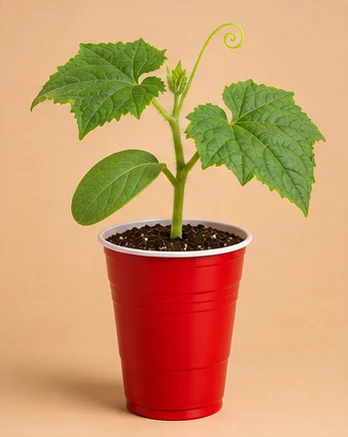
What comes in the cup
A young cucumber plant in a red cup without drainage holes, with growing medium.
Light
Give the seedling strong light. Site the mature plant in full sun.
Watering
In the red cup: The cup has no drainage holes. When the surface begins to dry, add a little water at a time. Stop when the mix is lightly moist. If water pools, gently tip out the excess while holding the root ball in place. Once transplanted to a pot with drainage or a garden bed: Check the soil regularly once flowering starts. Keep moisture even.
Planting and transplanting
Wait for warm soil and settled weather. Slip the root ball out intact and transplant into a sunny bed or roomy draining container. Add a trellis for a climbing variety. Gradually acclimate the plant to outdoor conditions before moving it outside full time.
What to watch for
Harvest frequently at the size recommended for the variety. Choose a compact cultivar for containers.
Common varieties
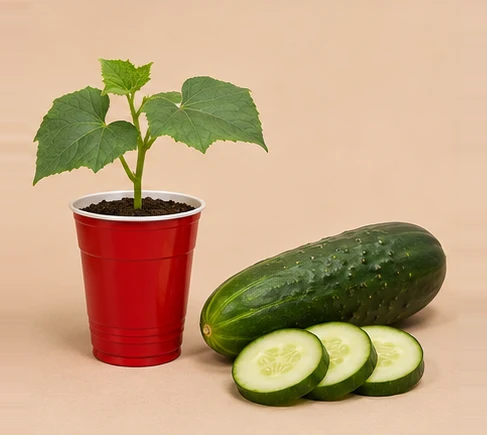 Marketmore 76
A dark green outdoor slicer for salads.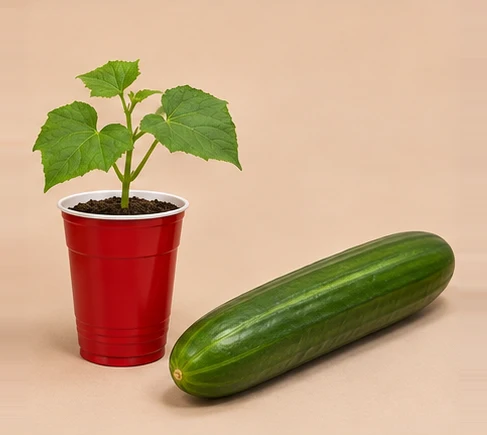 Straight Eight
A traditional long, straight slicing cucumber.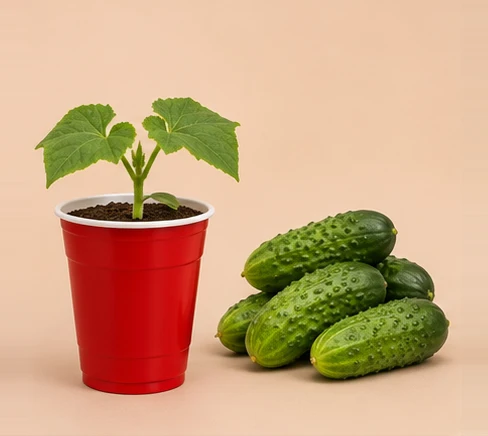 Boston Pickling
A short-fruited variety for pickling.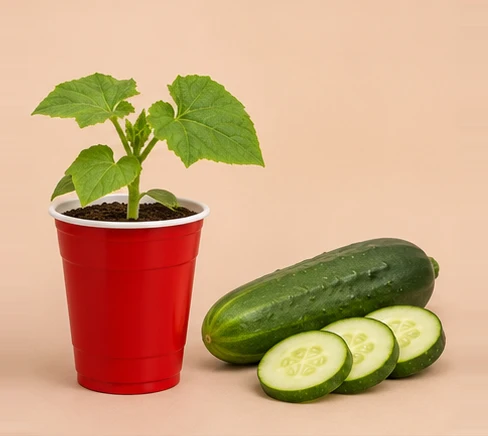 Bush Champion
A compact slicing cucumber for smaller gardens and containers.
Seasonal timing and U.S. maps
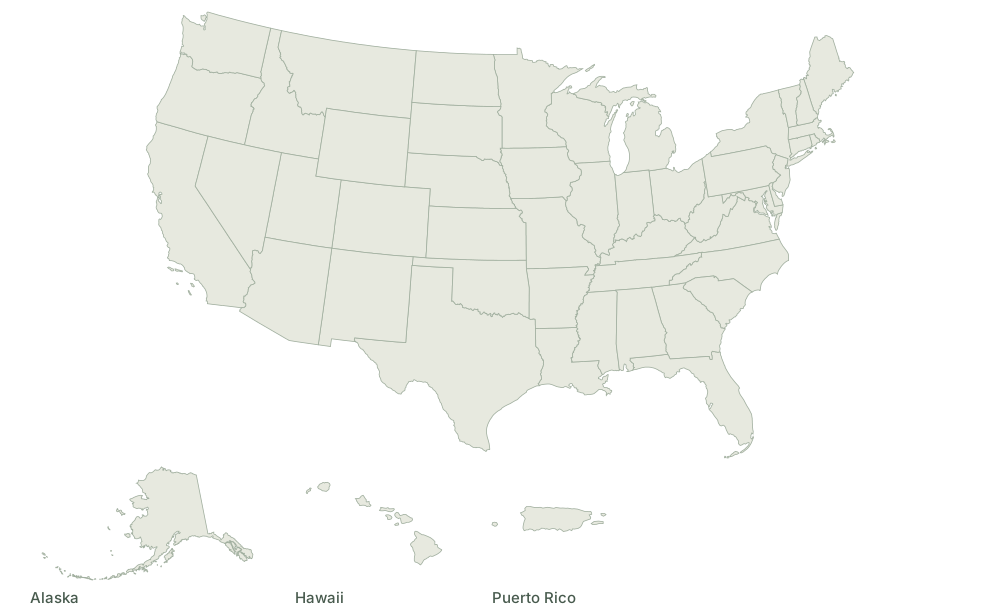
Enter a ZIP code to see the estimated transplant dates for this plant. The U.S. map shows current-month conditions.
- Estimated planting window
- Window opens soon
- Outside estimated window
- Use regional timing
- Freeze possible year-round
Shaded areas estimate planting conditions using nearby weather stations. Green shows a typical transplant window during part of the current month. Gray means local planting guidance is needed. Local heat, frost, and soil conditions can change the timing. NOAA 1991–2020 climate normals.
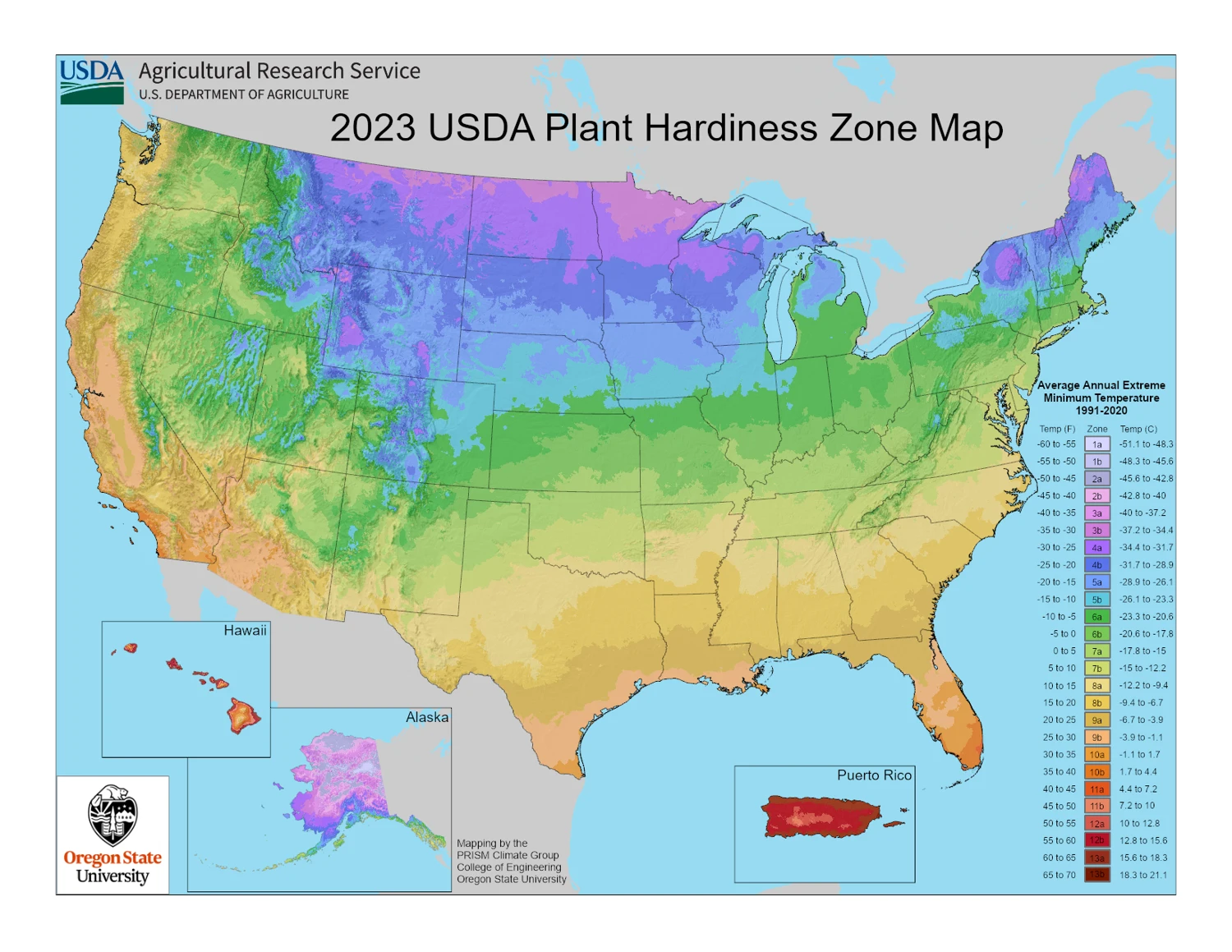
See the USDA hardiness zone map
Zone colors describe winter cold. Enter your ZIP in the seasonal guide for local planting estimates.