CupPlants
Houseplant
Inch Plant
Tradescantia zebrina
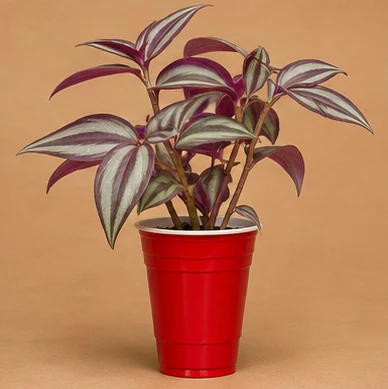
Trailing stems carry striped purple and silver leaves.
Pet caution for cats and dogs
Chewing the leaves or stems can irritate a pet’s mouth and stomach. Contact with the sap can also irritate skin.
If you suspect exposure, contact your veterinarian or ASPCA Poison Control. NC State Extension reference
What comes in the cup
A young inch plant plant in a red cup without drainage holes, with growing medium.
Light
Give it bright filtered light to preserve color.
Watering
In the red cup: The cup has no drainage holes. Check the mix about an inch down. If it feels dry, add a little water at a time. Stop when the mix is lightly moist. If water pools, gently tip out the excess while holding the root ball in place. Once transplanted to a pot with drainage or a garden bed: Water when the surface dries and let excess escape.
Planting and transplanting
When roots fill the cup, move it into a draining pot only slightly wider than the root ball. Keep it at the same depth.
What to watch for
Sparse stems or fading stripes can point to inadequate light. Move it gradually to a brighter spot.
Seasonal timing and U.S. maps
Indoor timing depends on the conditions you can provide at home.

- Indoor growing · year-round where suitable
See the USDA hardiness zone map
Zone colors describe winter cold. Enter your ZIP in the seasonal guide for local planting estimates.