CupPlants
Houseplant
Peace Lily
Spathiphyllum spp.
Deep green foliage and white, sail-shaped blooms.
Pet warning for cats and dogs
Chewing this plant releases insoluble calcium oxalate crystals that can cause mouth pain, drooling, and vomiting in cats and dogs. Swelling that interferes with swallowing or breathing needs urgent veterinary care.
If you suspect exposure, contact your veterinarian or ASPCA Poison Control. ASPCA Poison Control reference
What comes in the cup
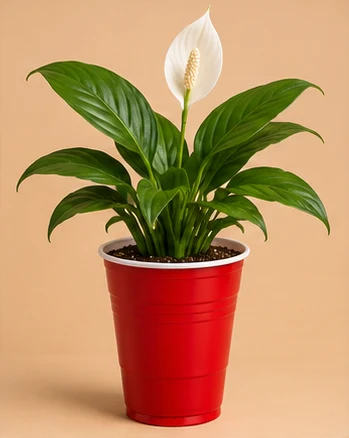
A young peace lily plant in a red cup without drainage holes, with growing medium.
Light
Use bright filtered light for flowering. Keep out of strong direct sun.
Watering
In the red cup: The cup has no drainage holes. When the surface begins to dry, add a little water at a time. Stop when the mix is lightly moist. If water pools, gently tip out the excess while holding the root ball in place. Once transplanted to a pot with drainage or a garden bed: Water when the surface starts to dry. Keep the mix lightly moist and let it drain.
Planting and transplanting
When roots fill the cup, move it into a draining pot only slightly wider than the root ball. Keep it at the same depth.
What to watch for
Wilting can come from dry soil or damaged wet roots. Check the mix first.
Seasonal timing and U.S. maps
Indoor timing depends on the conditions you can provide at home.

- Indoor growing · year-round where suitable
See the USDA hardiness zone map
Zone colors describe winter cold. Enter your ZIP in the seasonal guide for local planting estimates.