CupPlants
Houseplant
Rubber Plant
Ficus elastica
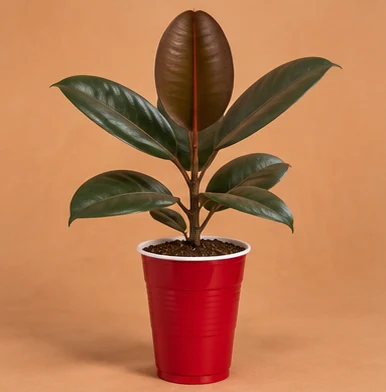
Broad, leathery leaves on an upright stem.
Pet caution for cats and dogs
The sap in the leaves and stems can irritate a pet’s mouth, stomach, or skin. Keep this Ficus away from chewing pets.
If you suspect exposure, contact your veterinarian or ASPCA Poison Control. Pet Poison Helpline reference
What comes in the cup
A young rubber plant plant in a red cup without drainage holes, with growing medium.
Light
Give it bright filtered light and acclimate it gradually to any mild direct sun.
Watering
In the red cup: The cup has no drainage holes. Check the mix about an inch down. If it feels dry, add a little water at a time. Stop when the mix is lightly moist. If water pools, gently tip out the excess while holding the root ball in place. Once transplanted to a pot with drainage or a garden bed: Water when the top inch or two dries, then empty the saucer.
Planting and transplanting
When roots fill the cup, move it into a draining pot only slightly wider than the root ball. Keep it at the same depth.
What to watch for
Leaf drop can follow a sudden change in light or temperature. Avoid contact with the milky sap.
Seasonal timing and U.S. maps
Indoor timing depends on the conditions you can provide at home.

- Indoor growing · year-round where suitable
See the USDA hardiness zone map
Zone colors describe winter cold. Enter your ZIP in the seasonal guide for local planting estimates.